What Are a Lawyer's Duties to Protect Client Data?
Lawyers in the United States must protect client information under their state rules of professional conduct. Most states base those rules on the ABA Model Rules. A law firm should check its own state's rules and ethics opinions because the Model Rules are not the final word.
ABA Model Rule 1.6(c) says a lawyer must make reasonable efforts to prevent unauthorized disclosure of, or access to, client information. That duty covers client files, settlement instructions, and any email that carries client information.
ABA Model Rule 1.1, Comment 8 treats competence as including knowledge of the benefits and risks of relevant technology. For a lawyer, that means understanding the tools the firm uses to send and receive client information.
ABA Model Rules 5.1 and 5.3 say lawyers who manage a firm must take reasonable steps so their lawyers and nonlawyer staff follow the same professional duties. In a small or midsized firm, this often falls on the managing partner or the office administrator. Staff training is a practical part of the effort these rules call for.
- Protect client files by limiting access and practicing safe email habits.
- Confirm wire instructions with a known client number before sending funds.
- Keep records of phishing training and simulation results.
- Check your state bar rules and ethics opinions for specific technology duties.
ABA Formal Opinion 477R explains that what counts as reasonable changes with the risk, and no one set of steps fits every firm. ABA Formal Opinion 483 describes a lawyer's obligations after an electronic data breach or cyberattack. Those duties include watching for a breach, stopping it, repairing the damage, and telling current clients in some cases. These opinions do not require one product. They describe duties a firm must think through.
Reasonable efforts are not one fixed checklist. A firm that handles real estate closings may need stronger verification steps than a firm that rarely moves client funds. The same point from ABA Formal Opinion 477R is that the response should match the risk. A lawyer with managerial authority should ask how client information moves through the firm's email, file systems, and vendors.
Staff training fits into that process. When a paralegal opens a client file request, the security decision is made at the inbox. A short phishing simulation is a practical way to practice that decision. OutPhish records each simulation and training module in an audit record. The firm can share that record with insurers or auditors if asked.
How Can Law Firms Prevent Wire Fraud?
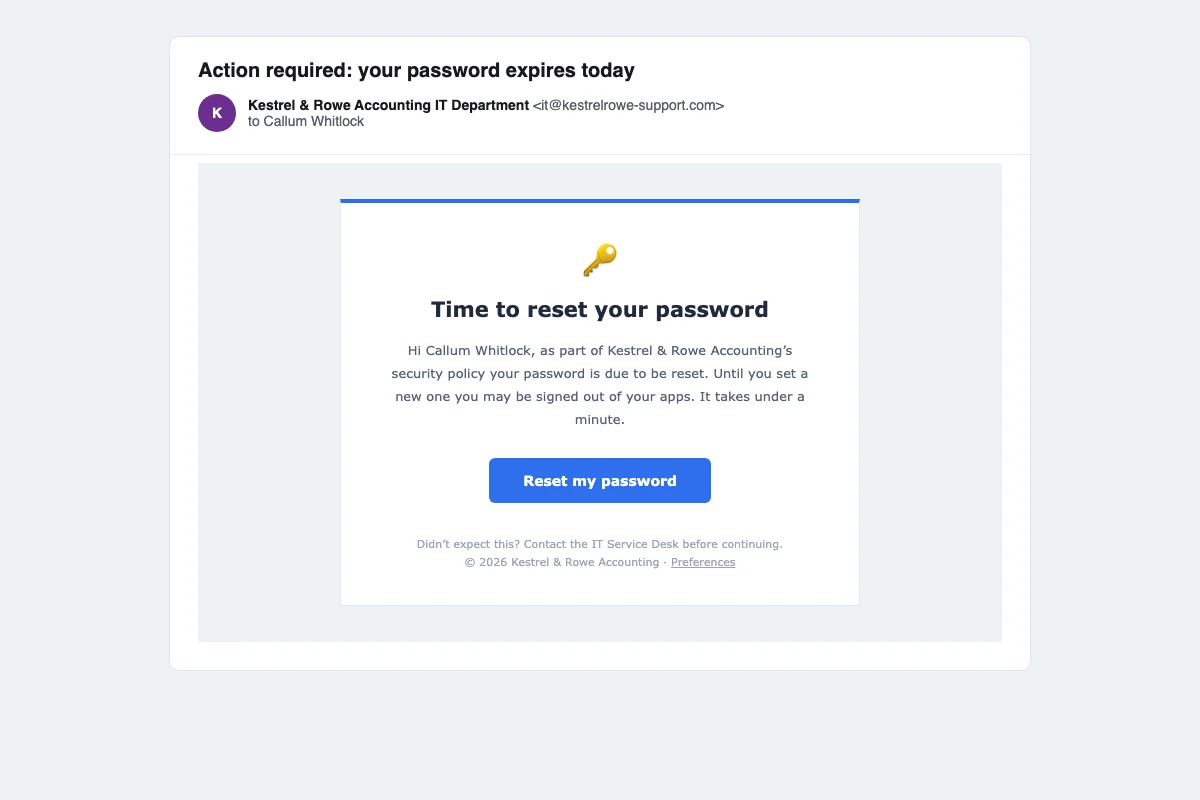
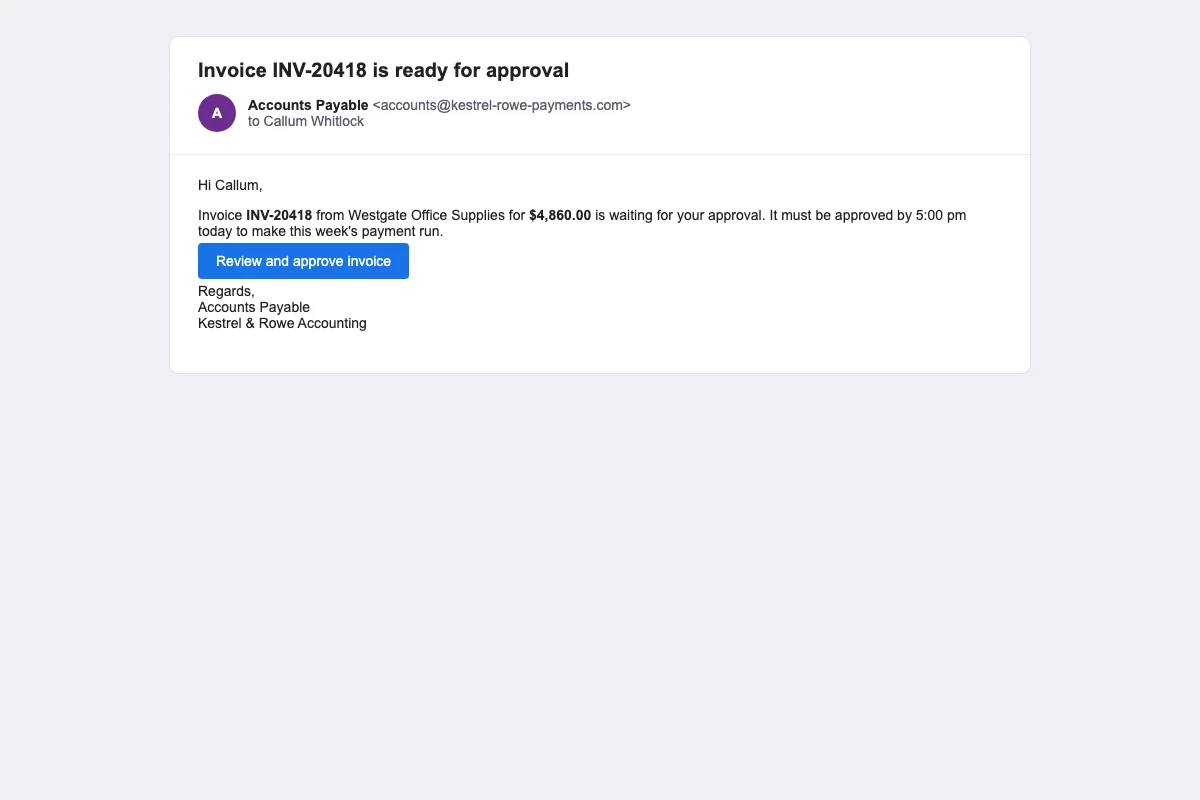
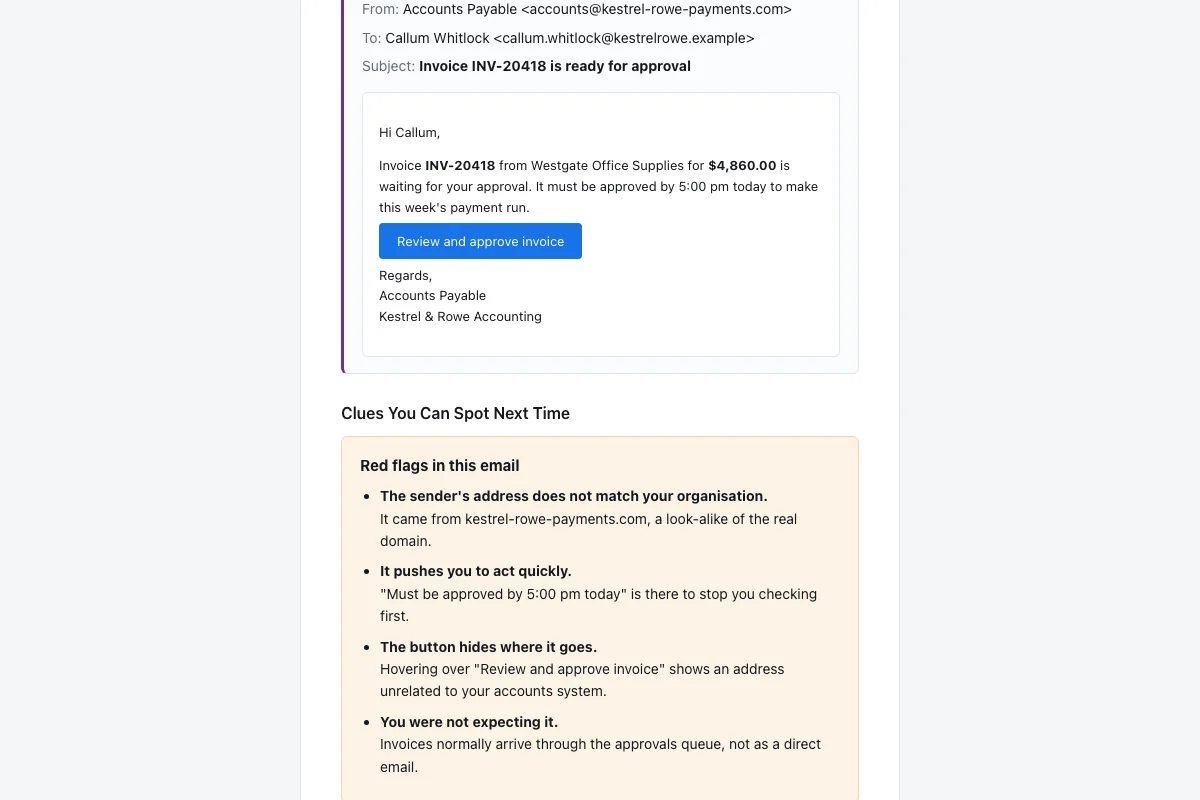
A law firm can lower its wire fraud risk by requiring a second check on payment instructions and by running simulated phishing messages. A fraudulent email often asks for an invoice approval or a change to payment details. The safest habit is to verify any change by phone using a number the firm already has on file.
Attorneys and staff should treat every email that requests client funds as a potential phishing attempt. They should slow down when a message creates urgency. A request to approve an invoice before 5 pm may be real, but it may also be a simulation or an attack. The firm's rule should be clear: no wire change goes out without a second check.
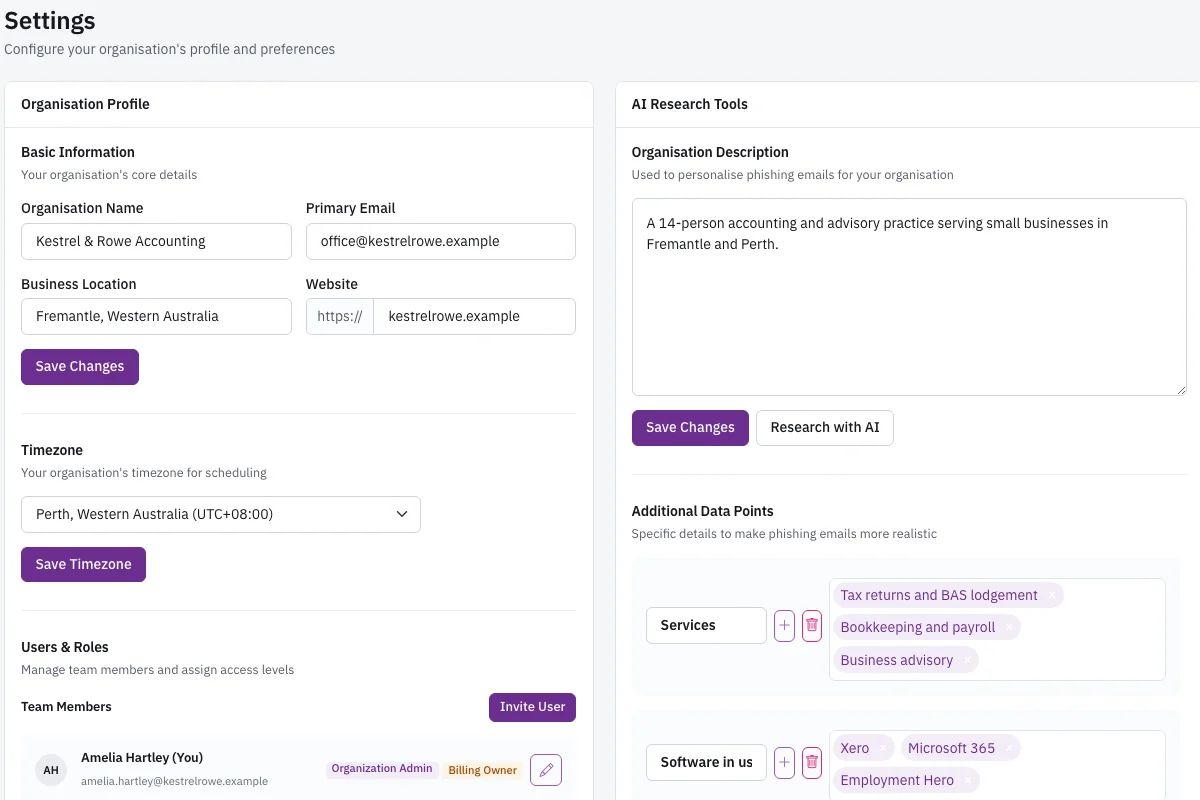
OutPhish lets a law firm send business email compromise training simulations that look like accounts payable requests or fake wire instructions. Staff who click get immediate feedback about the red flags they missed. That feedback connects the click to the real risk of sending money to the wrong account. You can also use phishing simulation software to vary the messages by role and difficulty. Regular practice helps staff spot the patterns.
- Confirm wire instructions by phone or in person using an existing number.
- Ask a second attorney to review payment changes above a set amount.
- Never click a link in an invoice email without checking the sender's full address.
- Report suspected phishing to the office administrator or IT contact.
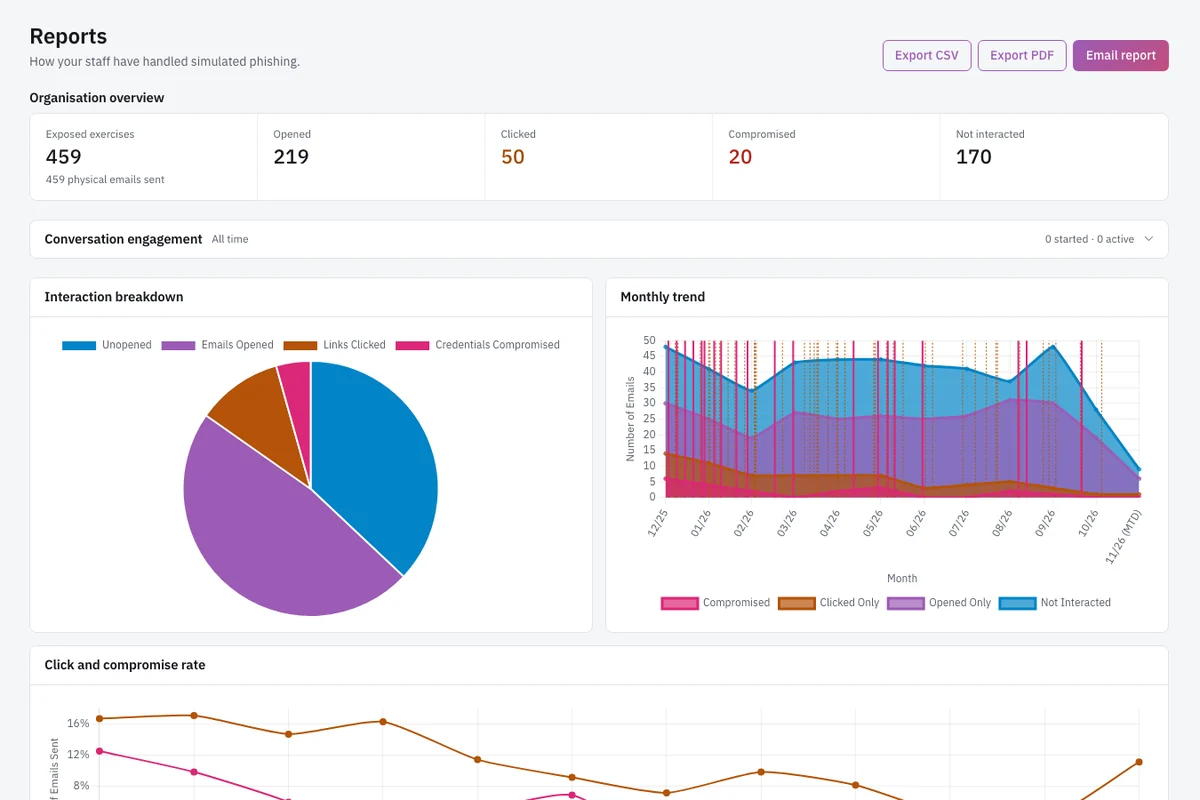
Practical habits for a law firm include the list above and a regular review of the reports page. A managing partner can look for practice groups that click more often and schedule a short staff discussion.
A law firm can practice wire fraud scenarios with simulations that look like vendor invoices or a title company's payment change. The simulation may ask the reader to click a link or approve an invoice before a deadline. The feedback email then shows the red flags, such as a mismatched reply address or pressure to act quickly. This is not a test of good character. It is a drill for a known risk.
Some firms set a dollar amount for wire changes. Above that amount, two people must confirm the instruction by phone. Staff should type the phone number from the client file instead of calling a number in the email. That habit protects against a fraudulent change. Simulation reports help the firm see which staff members may need a second reminder.
How Often Should Law Firm Staff Do Phishing Training?
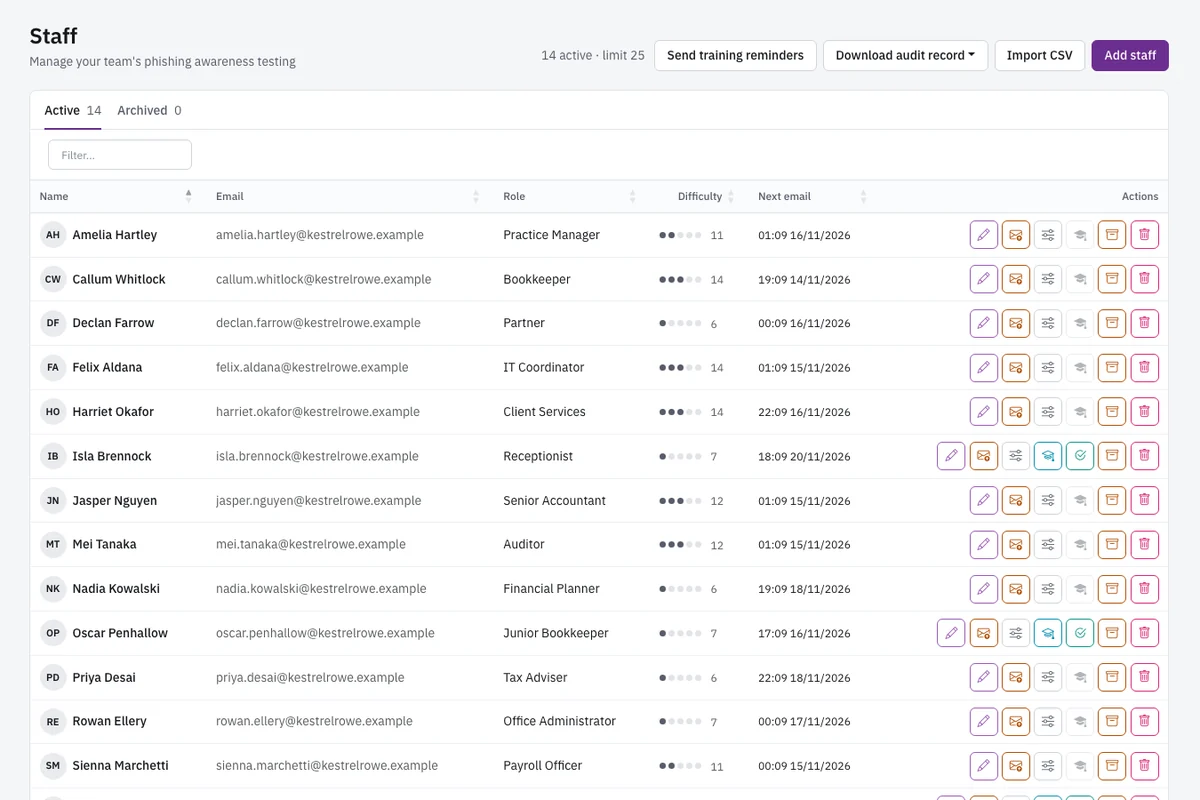
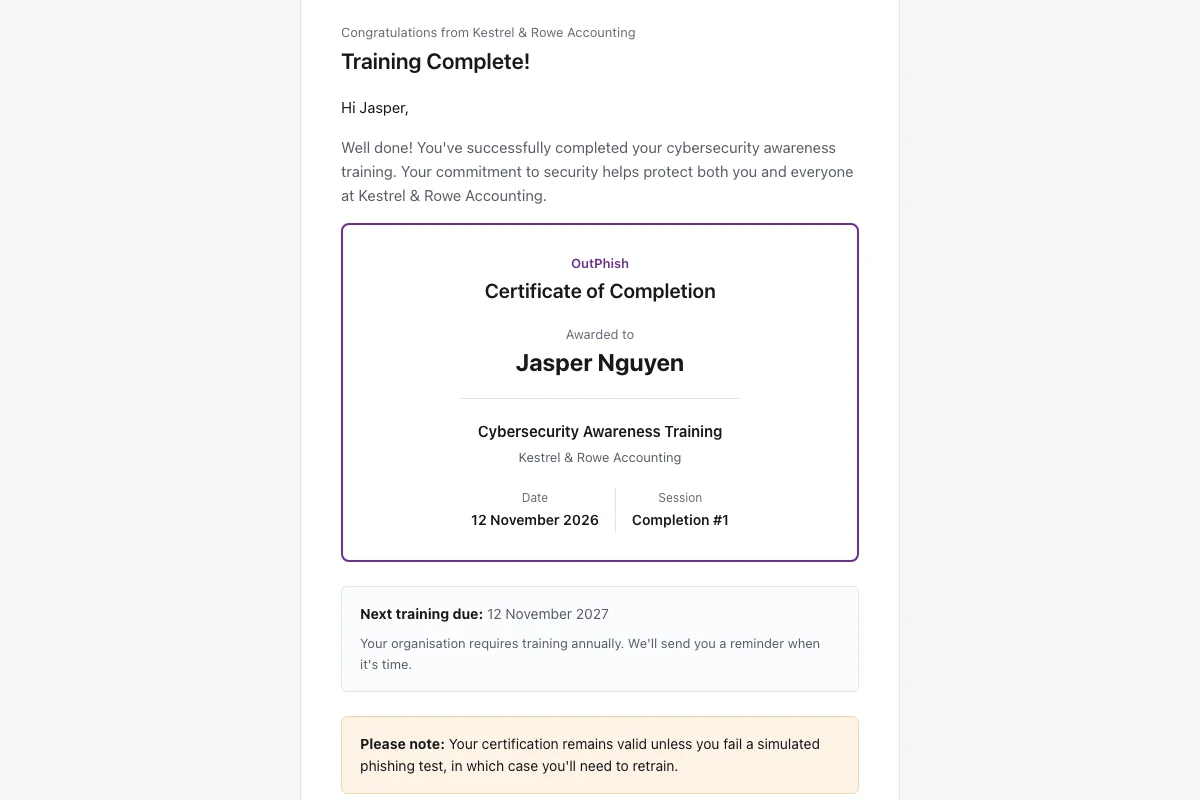
Most law firm staff should complete a phishing refresher at least once a year and again after a failed simulation. OutPhish schedules each person's next test and training due date from the settings page. Administrators can choose a schedule such as weekly tests and annual refresher training.
Treat phishing training for law firms as a recurring program. A one time session fades quickly. Staff who practice every week or month build a habit of checking sender addresses, pausing on urgent requests, and reporting anything unusual. Each person moves one step up after a clean simulation, and the firm can cap that level. That keeps the practice from feeling easy or repetitive.
After a click, the platform sends instant feedback and asks the person to complete a short training module. That email includes a certificate and the next scheduled due date. This gives the firm a simple record for each attorney, paralegal, and legal assistant. Administrators can send training reminders when someone is late.
A law firm should also review reports monthly. The interaction pie chart and monthly trend chart show whether people are clicking less often over time. If one practice group shows more clicks, the managing partner can target that group with reminders or a staff meeting. For more details on plans, see the pricing page or the OutPhish FAQ.
Paralegals and legal assistants are part of the training group. They often manage invoices, scheduling, and document requests. An attacker may target a legal assistant before aiming at a partner. OutPhish lets an administrator set one difficulty for all staff or vary it by role. The staff list shows each person's current level and next scheduled test.
Annual training works well as a minimum. Many law firms add short refreshers after a click or after a near miss. The reminders are quick enough to fit between client matters. The platform's schedule includes both a repeating cadence and a due after failure rule. That combination gives the firm a structure without needing extra administrative time.