11 May
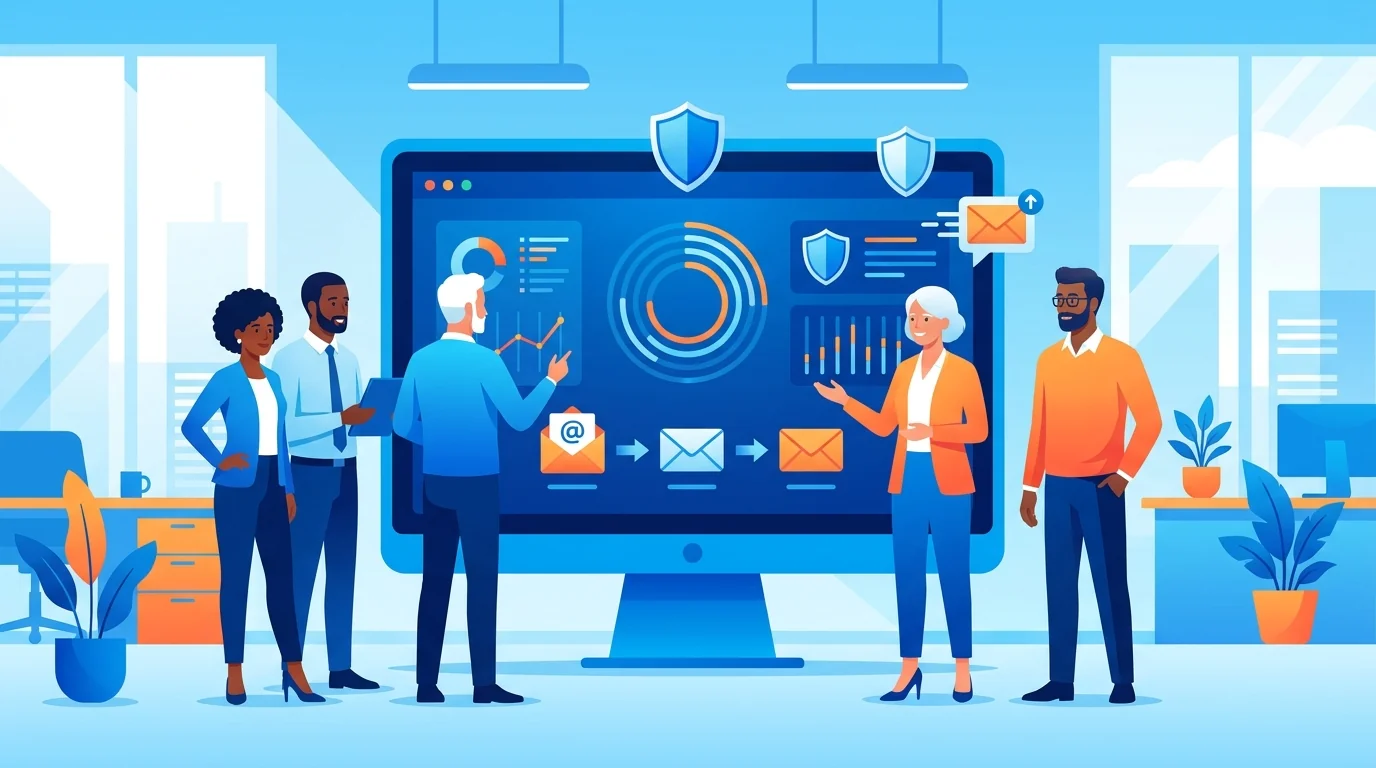
Your employees likely received dozens of phishing emails last month. You probably don’t know that because nobody tracked them. Some got caught by spam filters. Others landed in inboxes. A few might have been clicked. This is the reality for small businesses with 5 to 50 employees, where phishing attacks arrive constantly but security awareness training feels like something only big companies can afford or manage.
The good news: launching phishing training no longer requires an IT department, a large budget, or weeks of planning. Modern platforms designed for small businesses can often get you running quickly, often with minimal ongoing management.
Why Traditional Security Training Fails Small Businesses
Most security awareness programs were built for enterprises with dedicated security teams. They assume someone has time to configure complex dashboards, design custom phishing templates, schedule training modules, and analyze detailed reports. A 15-person accounting firm doesn’t have that person. Neither does a 30-employee marketing agency or a 40-person construction company.
The result? Small businesses either skip training entirely or buy a program that sits unused because nobody has time to run it. Research on phishing training effectiveness shows that even well-designed programs fail when organizations can’t maintain consistent delivery.
Zero-setup training platforms solve this by automating nearly everything. You provide basic company information, the system handles the rest. Phishing simulations go out automatically. Training appears when someone clicks a fake phish. Reports generate themselves. Your involvement drops to checking a dashboard regularly.
Calculating Employee Cybersecurity Awareness Training Cost
Before choosing a platform, you need realistic numbers. Employee cybersecurity awareness training cost varies widely based on features, user count, and contract length.
For a typical small company, expect these ranges:
- Basic automated platforms: typically $2 to $5 per user per month ($600 to $1,500 annually)
- Mid-tier solutions with simulations and training: typically $4 to $8 per user per month ($1,200 to $2,400 annually)
- Enterprise-focused tools: typically $8 to $15 per user per month ($2,400 to $4,500 annually)
The enterprise options usually include features small businesses don’t need: compliance tracking for regulations you’re not subject to, integrations with security tools you don’t own, and reporting depth that exceeds your requirements.
Compare these costs against the average small business phishing incident for companies with fewer than 50 employees, which typically runs between $75,000 and $120,000 when you factor in downtime, recovery, and increased costs from ransomware or regulatory fines, according to 2025 and 2026 industry reports. A typical annual training investment looks reasonable against those numbers.
Phishing Awareness Training Implementation Guide: The Setup Process
Getting started with a zero-setup platform typically follows this pattern:
Step 1: Choose Your Platform
Look for these specific features when evaluating options:
- Automated simulation scheduling (not manual campaign creation)
- Adaptive difficulty that adjusts based on employee performance
- Immediate training delivery when someone clicks a simulated phish
- Simple reporting that shows click rates and improvement over time
- No required IT integration for basic functionality
Skip platforms that require you to design your own phishing emails or build custom training courses. That’s work you don’t have time for. Our guide to plug-and-play security solutions covers evaluation criteria in more detail.
Step 2: Add Your Users
Most platforms accept a simple CSV file with employee names and email addresses. Some connect directly to Google Workspace or Microsoft 365 to pull your user list automatically. Either way, this step takes minutes, not hours.
Don’t overthink user grouping at this stage. Some platforms want you to organize employees by department, role, or risk level. For initial setup, a single group works fine. You can segment later once you have data on who needs extra attention.
Step 3: Configure Email Delivery
Simulated phishing emails need to reach inboxes, not spam folders. This usually requires adding the platform’s sending domain to your email allowlist. The platform should provide specific instructions for your email provider.
For Google Workspace, this means adding entries to your spam filter settings. For Microsoft 365, you’ll create a transport rule or add to your allowed senders list. If you use a third-party spam filter like Barracuda or Mimecast, you’ll need to whitelist there too.
Test this configuration before launching. Most platforms include a test email feature that shows delivery is working.
Step 4: Communicate With Your Team
Tell employees that phishing training is starting. This might seem counterintuitive (won’t they be more careful if they know tests are coming?), but transparency matters for several reasons:
- Employees who feel tricked become resentful, not more security-conscious
- Knowing tests exist creates ongoing vigilance, not just test-day alertness
- You’re building a security culture, not catching people doing something wrong
Keep the announcement simple: “We’re starting phishing awareness training to help everyone recognize suspicious emails. You’ll receive simulated phishing emails periodically. If you click one, you’ll see a quick training module. This isn’t about punishment. It’s about building skills.”
Step 5: Launch and Let It Run
Enable the automated simulation schedule and step back. Good platforms handle timing, frequency, and content selection without your input. Simulations might go out daily, weekly, or at random intervals depending on platform settings.
Resist the urge to micromanage. The system is designed to run independently. Check your dashboard regularly to see aggregate results, but don’t obsess over individual clicks in the first few weeks.
Best Cybersecurity Training for Non-Technical Staff
The best cybersecurity training for non-technical staff shares several characteristics. It’s short, specific, and delivered at the moment of maximum relevance.
Annual training sessions fail because they dump information on employees who immediately forget it. By the time a real phishing email arrives months later, the training content has faded. Studies on phishing awareness programs suggest that ongoing, spaced training produces better results than annual sessions.
Zero-setup platforms solve this through “teachable moments.” When an employee clicks a simulated phish, they immediately see a brief training module explaining what they missed. The fake invoice email they just clicked? The training shows them the sender address was wrong, the link URL didn’t match the company name, and the urgency language was a red flag.
This approach works because:
- Training arrives when attention is highest (right after making a mistake)
- Content is specific to the exact technique that fooled them
- Modules are often just a few minutes, rather than long compliance videos
- Repetition happens naturally through ongoing simulations
For employees who struggle repeatedly, good platforms increase simulation frequency and provide additional training modules. Those who consistently spot fake emails receive fewer tests, keeping the system efficient.
Measuring Results Without a Security Team
You don’t need complex analytics to know if training is working. Track three numbers:
Click rate: What percentage of employees click simulated phishing links? A new program might start with a high click rate. After a few months of consistent training, expect this to drop significantly. Over time, reaching low single digits is achievable.
Report rate: What percentage of employees report suspicious emails using whatever method you’ve established? This number should increase over time. Employees who report fake phishes demonstrate active engagement, not just passive avoidance.
Repeat clickers: Do the same people click multiple simulations? A small group of repeat clickers often represents your highest risk. These individuals may need additional training or closer supervision of their email access.
Review these numbers monthly. You’re looking for trends, not perfection. A click rate that drops significantly over a few months shows real improvement, even if you haven’t hit single digits yet.
Common Implementation Mistakes
After helping dozens of small businesses set up phishing training, I often see the same errors:
Starting too aggressive: Don’t launch with highly complex phishing simulations. Begin with obvious fakes (bad spelling, suspicious senders) and increase difficulty as employees improve. Starting hard creates frustration and damages buy-in.
Punishing clicks: Some businesses want to discipline employees who click simulated phishes. This backfires completely. People stop reporting real suspicious emails because they fear punishment. Training becomes a source of anxiety rather than skill-building.
Ignoring the results: Setting up training and never checking the dashboard wastes your investment. Regularly spend time reviewing results. Identify patterns. Notice if a particular employee or department struggles consistently.
Excluding leadership: Owners and managers often exempt themselves from training. This sends the wrong message and misses real risk. Executives are actually targeted more frequently with spear phishing attacks. Include everyone.
Stopping too soon: Phishing training isn’t a one-time project. Attackers constantly develop new techniques. Employees need ongoing exposure to maintain awareness. Plan for continuous training, not a short campaign.
Scaling as Your Business Grows
A training program that works for a small team should scale smoothly as you grow. Most platforms charge per user, so costs grow linearly. The administrative burden shouldn’t increase much because automation handles the additional users.
As you grow, consider adding:
- Role-specific simulations (accounting staff receive fake invoice emails, HR receives fake resume attachments)
- Department-level reporting to identify teams that need extra attention
- Integration with your identity provider for automatic user provisioning
Our automated phishing training guide covers these advanced configurations in detail.
What Happens After Setup
Once your training program runs for a few months, you’ll notice changes beyond the metrics. Employees start forwarding suspicious emails to you or IT support. They mention catching a real phishing attempt. Someone asks about a text message that seemed sketchy. These behavioral shifts indicate genuine security awareness, not just test performance.
The goal was never perfect click rates. The goal was building an organization where everyone thinks twice before clicking unfamiliar links, where reporting suspicious messages feels normal, and where a single successful phish doesn’t compromise your entire business.
That outcome doesn’t require a security team, a large budget, or months of planning. It requires choosing the right tool, a quick setup, and letting the system do its job. For small businesses facing the same threats as enterprises but with a fraction of the resources, zero-setup training makes real security accessible.
Start Building Your Human Firewall
Launch a realistic phishing simulation in minutes and get the tools you need to build a cyber-aware team.
This blog offers general information about phishing and cybersecurity for small and medium-sized organisations. It is not legal, financial, or technical advice. Speak to a qualified professional before acting on any guidance you read here.