05 Jan
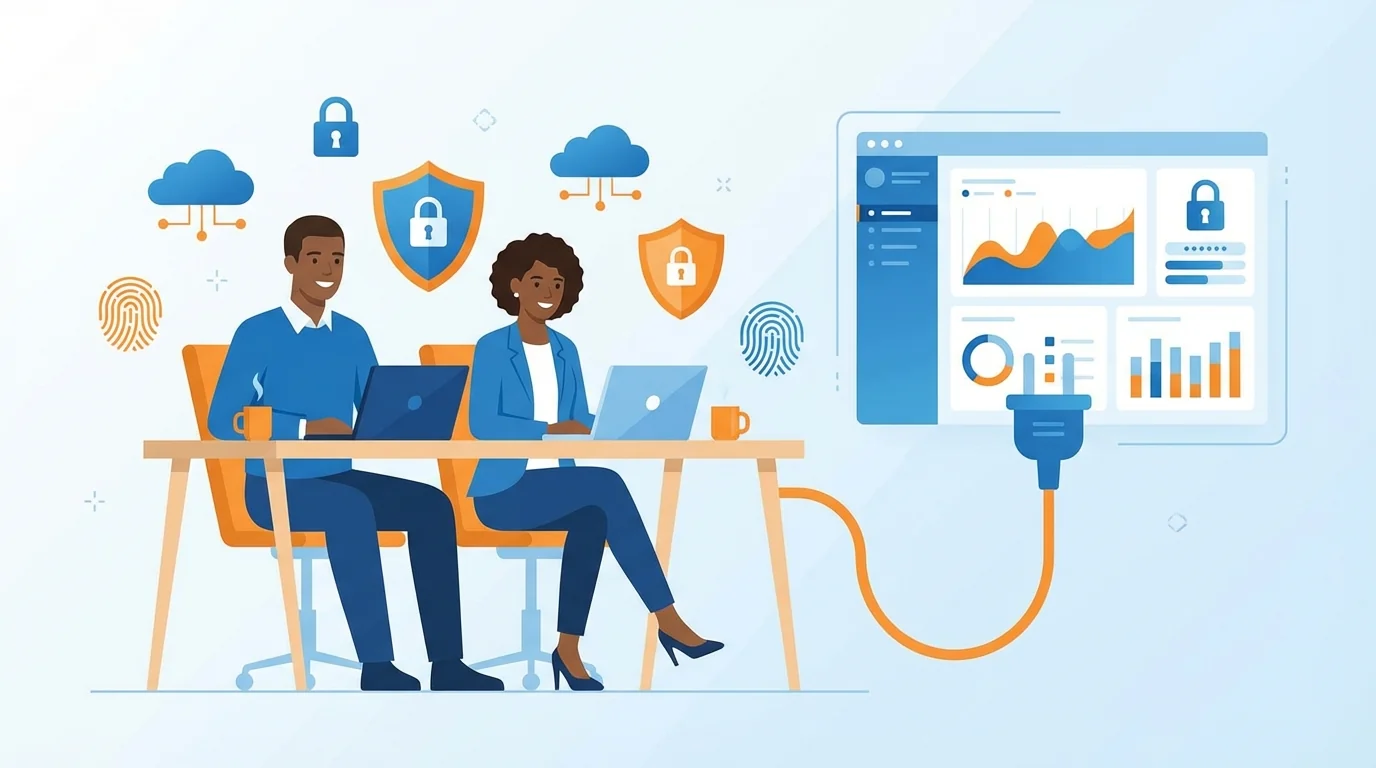
A regional dental practice in Ohio recently lost access to all patient records for four days. The cause was not a sophisticated hack into their server. It was a single click by a front-desk receptionist on an email that appeared to be a routine insurance claim update. By the time the office manager realized the link was malicious, ransomware had already begun encrypting their local network. This scenario plays out across the United States every day because small firms often lack the resources of a Fortune 500 company. However, plug-and-play security solutions small business owners can deploy in minutes are now making high-level protection accessible to everyone.
Most small business owners wear ten different hats. You are the CEO, the HR manager, and often the unofficial tech support. Spending hours every week reviewing security logs or teaching classes on password hygiene is not a realistic use of your time. This time constraint is exactly why traditional security training fails. It was built for companies with dedicated IT departments and large budgets. For the rest of us, we need systems that work in the background without requiring constant attention.
Why Traditional Training Fails the 5-50 Employee Business
If you have ever sat through a mandatory forty-minute security video, you know why these programs are ineffective. Employees often mute the volume, let the video run in a background tab, and guess their way through the quiz at the end. Research shows that effective security practices require more than just passive observation. When training is boring or feels like a chore, engagement drops. When engagement drops, people stop paying attention to the very red flags that could save your company from a data breach.
Another major issue is the “one-size-fits-all” approach. A generic email about a “wire transfer” might not fool anyone at a construction company, but a fake “invoice for lumber” might. Traditional platforms require you to manually select these templates, which takes time you do not have. If the content does not feel relevant to the employee’s specific job, they will ignore it. This disconnect is a primary reason why many firms remain vulnerable despite having some form of training in place.
There is also the risk of backfiring. Some companies have tried to “scare” employees into compliance by using extreme examples. For instance, sending a fake email about a health crisis or a company-wide layoff to see who clicks can destroy morale. To avoid this, you should follow an ethical phishing awareness training implementation guide to ensure your team feels supported rather than targeted. Training should be a tool for growth, not a trap.
The Mechanics of Plug-and-Play Security Solutions Small Business Owners Can Trust
The shift toward automation has changed how we approach employee protection. A plug-and-play system removes the manual labor from the equation. Instead of you acting as the teacher, the software uses Artificial Intelligence to handle the heavy lifting. This starts with the setup process. In the past, you had to white-list IP addresses and manually sync your employee directory. Now, these platforms connect directly to your email provider, such as Microsoft 365 or Google Workspace, with a few clicks.
Once connected, the AI begins to research your industry. It looks at the common types of communication your business handles. If you are a law firm, it understands that your team deals with court filings and client contracts. It then generates phishing simulations that mimic these specific interactions. This level of customization used to require a full-time security analyst. Now, it happens automatically in the background.
The “set-and-forget” nature of these tools is their biggest advantage. You can choose the frequency of the tests, and the system handles the rest. It will even adjust the difficulty. If an employee consistently identifies the “easy” fake emails, the system will gradually introduce more sophisticated ones. This personalized learning path ensures that no one is overwhelmed, but everyone is constantly improving.
Using Zero-Setup Cybersecurity Training Platforms to Save Time
Time is the most valuable asset in a small business. If a software tool takes more than an hour to learn, it usually ends up as “shelfware”—something you pay for but never use. Zero-setup cybersecurity training platforms solve this by eliminating the learning curve. You do not need to understand the technical details of how a phishing link is constructed to protect your team from one.
These platforms focus on “teaching moments.” Instead of a long lecture, the training happens the second a mistake is made. If an employee clicks on a simulated phishing link, they are immediately shown a brief, engaging page that explains what they missed. It might point out a misspelled URL or a generic greeting that should have raised a red flag. This immediate feedback is far more effective than a training session held six months later. It catches the employee while the context of the email is still fresh in their mind.
This approach also helps you build a phishing policy for your small business that actually works. A policy is just a piece of paper unless your team knows how to apply it. By using automated simulations, you are giving them a safe place to practice the policy every day. They learn that it is okay to be suspicious and that reporting a strange email is always the right move.
Addressing the Small Business Cyber Attack Statistics 2024
Many owners believe they are “too small to be a target.” They assume hackers only go after big names like MGM or UnitedHealthcare. The data tells a different story. According to small business cyber attack statistics 2024, firms with fewer than 100 employees are now the preferred targets for many cybercriminal groups. These attackers know that small businesses often have weaker defenses and are more likely to pay a smaller ransom quickly to get back to work.
A study on the cybersecurity preparedness of small-to-medium businesses found that many firms lack even basic protection because they find the available options too complex. Hackers count on this complexity to keep you vulnerable. They use automated tools to scan thousands of small businesses at once, looking for any open door. Often, that door is an untrained employee. In fact, over 90% of successful data breaches begin with a phishing email.
The cost of these attacks is rising. It is not just the ransom payment; it is the lost billing hours, the cost of forensic IT services, and the damage to your reputation. For a small business, a $20,000 loss can be the difference between staying open and closing your doors. Investing in a simple, automated training platform is a fraction of that cost and provides a layer of defense that firewalls alone cannot offer.
Building a Security Culture Without an IT Team
You do not need a Chief Information Security Officer (CISO) to have a secure company. What you need is a culture where security is everyone’s responsibility. This starts with the tone you set at the top. When you implement a training platform, explain to your team why it matters. It is not about monitoring their mistakes; it is about protecting the company’s future and their own jobs.
A good platform will provide you with a simple dashboard that shows your “company risk score.” This score should go down over time as your employees become more skilled at spotting threats. You can use this data to celebrate successes. Maybe the team went an entire month without a single “fail” on a simulation. Recognizing that achievement does more for your security culture than any reprimand ever could.
It is important to understand why phishing isn’t just a big company problem. Small businesses are often used as “stepping stones” to larger targets. If you provide services to a larger corporation, hackers might try to get into your system first to steal credentials that give them access to your client. This makes your security a selling point. Being able to tell your clients that your team undergoes regular, automated security training can give you a competitive edge in your industry.
What to Look for in a Plug-and-Play Platform
When you are evaluating different plug-and-play security solutions small business owners should prioritize three things: ease of use, relevance of content, and quality of reporting. If the platform requires you to spend hours every month managing it, it is the wrong tool for you. Look for a solution that offers:
- Automated Employee Sync: The system should automatically add new hires and remove former employees by looking at your email directory.
- AI-Generated Content: The emails should look like things your team actually receives, using your industry’s language and common scenarios.
- Immediate Feedback: Training should happen the moment a link is clicked, not weeks later in a classroom setting.
- Simple Analytics: You should be able to see at a glance who is struggling and who is an expert, without digging through complex spreadsheets.
Research into cybersecurity strategies for small businesses shows that the most successful companies are those that integrate security into their daily routine. An automated platform does exactly that. It turns security from a “yearly event” into a continuous process that requires zero extra effort from you.
The gap between the protection big corporations have and what small businesses can afford is closing. By moving away from manual, boring training and adopting automated, AI-driven solutions, you can protect your livelihood without becoming a tech expert. The goal is to make your business a “hard target.” When hackers realize your team is trained and alert, they will move on to an easier victim. Protecting your 5 to 50 employees does not have to be a full-time job; you just need the right tools working for you while you focus on growing your business.
Start Building Your Human Firewall
Launch a realistic phishing simulation in minutes and get the tools you need to build a cyber-aware team.
This blog offers general information about phishing and cybersecurity for small and medium-sized organisations. It is not legal, financial, or technical advice. Speak to a qualified professional before acting on any guidance you read here.